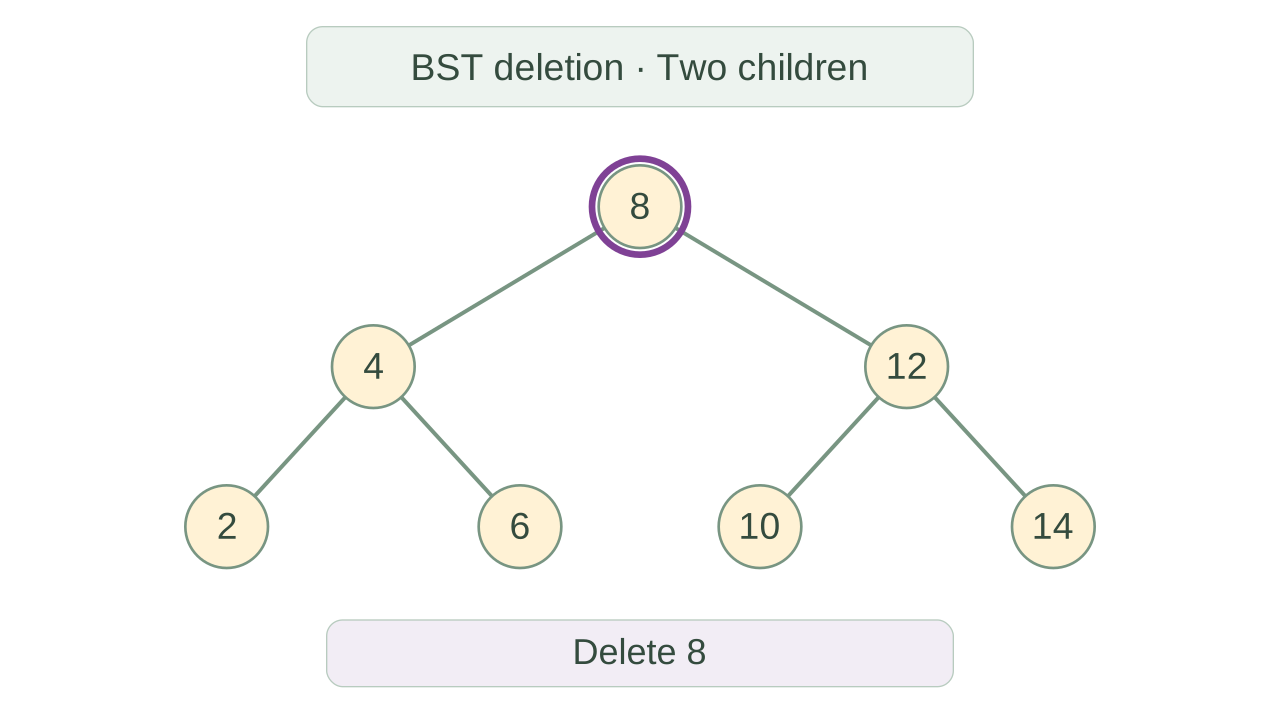
Given a binary search tree and a key value. Write a program to delete the given key from the binary search tree and return the updated root node. This is an excellent problem to learn pointer manipulation in binary trees and problem-solving using both iterative and recursive approaches.
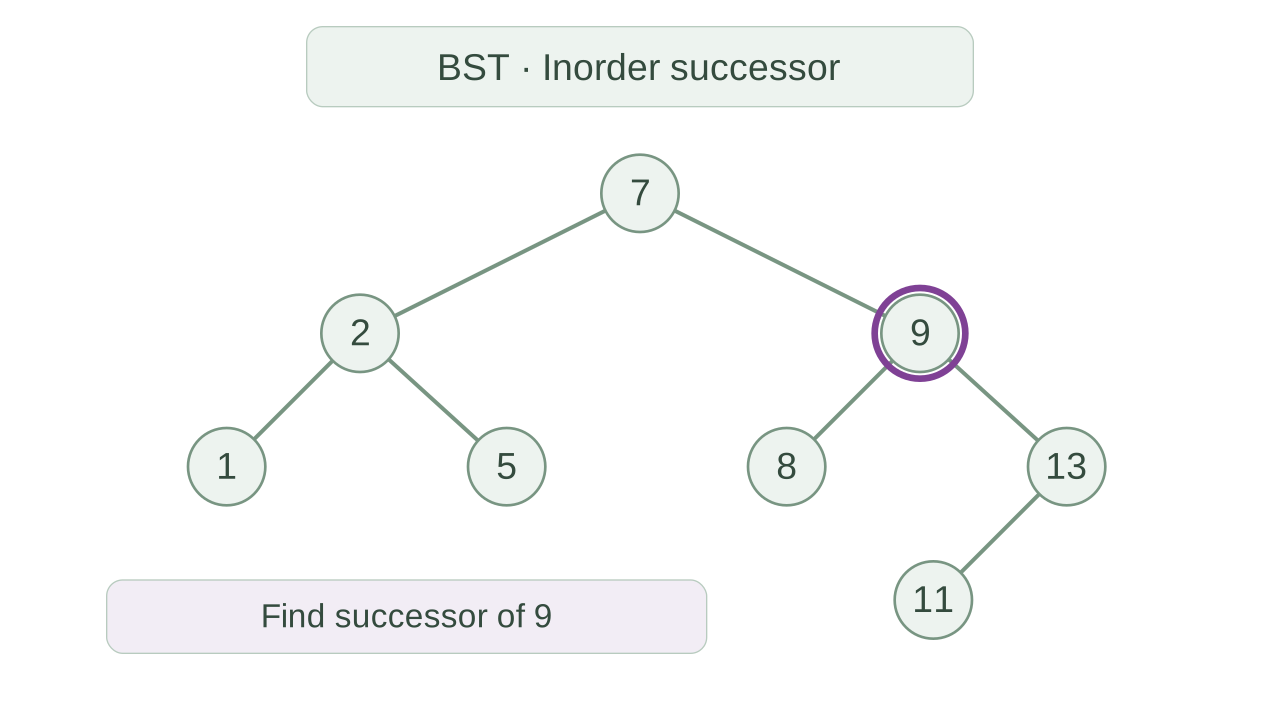
Given a node x and the root of a binary search tree, write a program to find the in-order successor of node x. The in-order successor of node x is a node that will be visited just after node x during an in-order traversal. In other words, the in-order successor of a node x is the node with the smallest key greater than x->key.
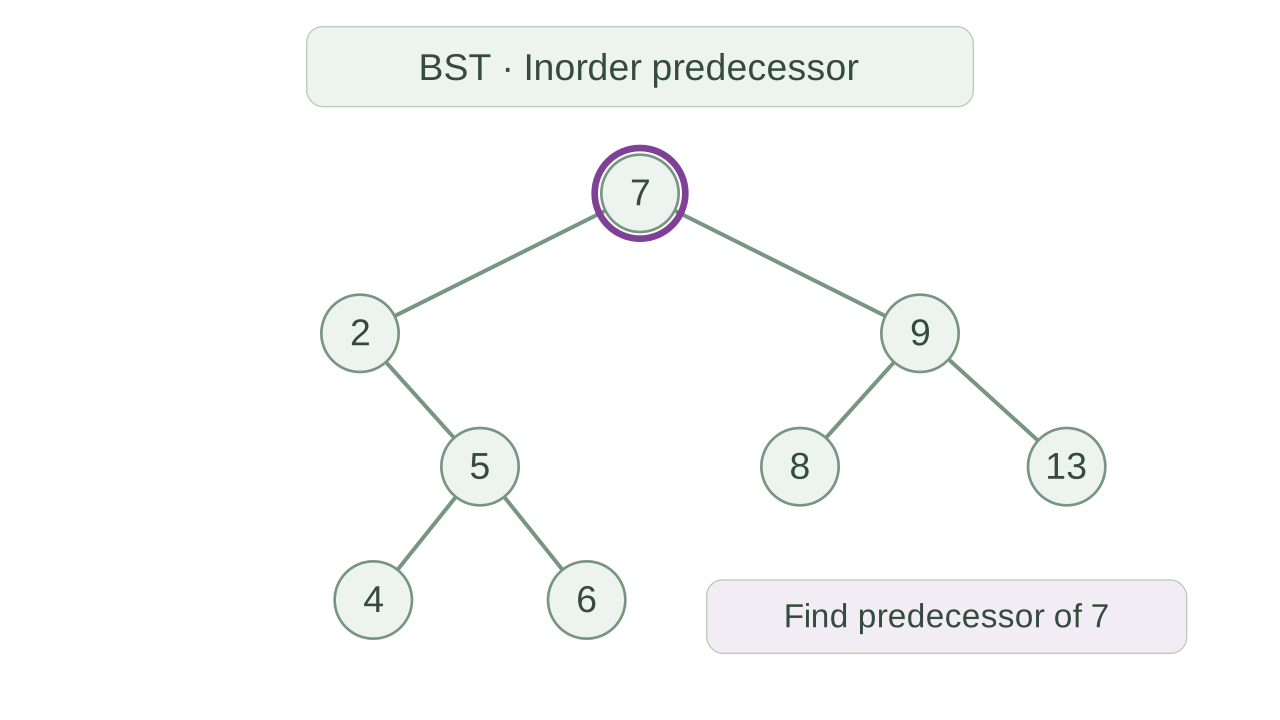
Write a program to find the in-order predecessor of a given node x in a binary search tree (BST). An in-order predecessor of node x is the node that will be visited just before node x in the in-order traversal. If the node x is visited first (leftmost node in BST) then the predecessor of node x is NULL.
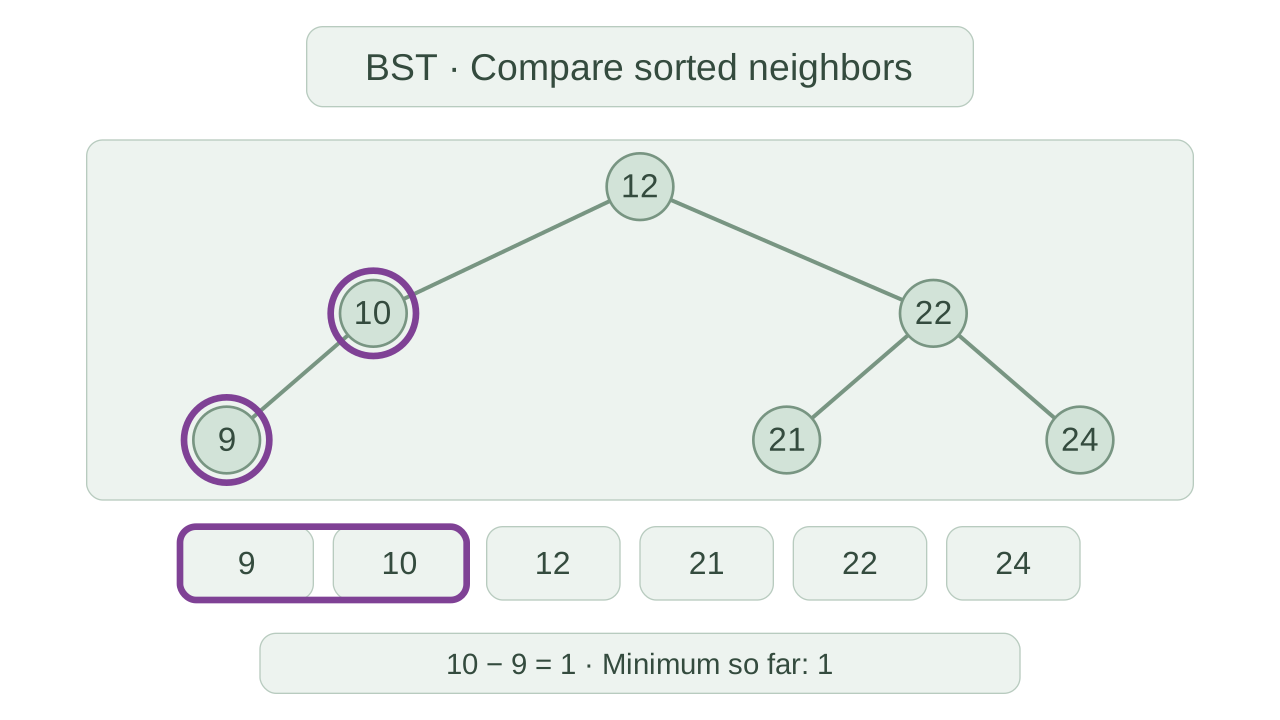
Given the root of a binary search tree (BST), write a program to find the absolute minimum difference between the values of any two nodes in the tree. Here node values in the tree can be positive, negative, or zero. Note: This is an excellent problem to learn problem-solving using iterative and recursive inorder traversal of a binary tree.
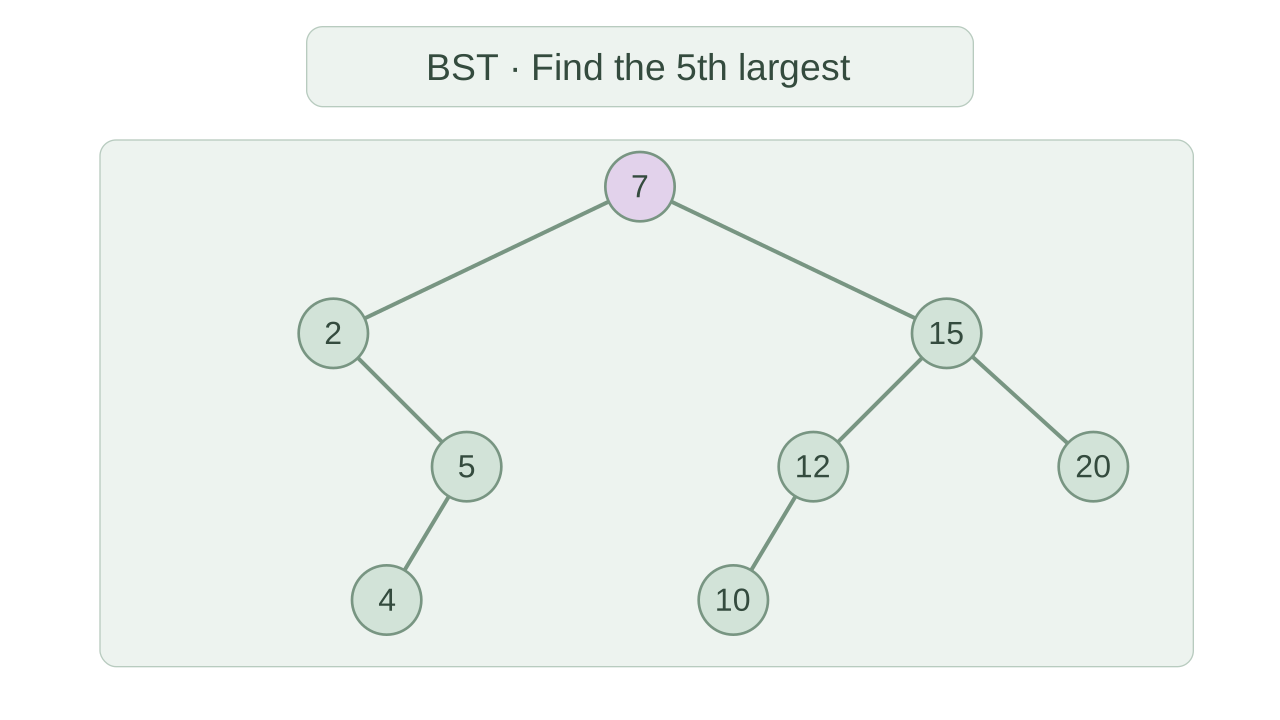
Given the root of a BST and an integer k, write a program to find the kth largest value among all the nodes' values in the binary search tree. Note: This is an excellent problem to learn problem solving using recursive and iterative inorder traversal and data structure augmentation (storing extra information inside BST nodes for solving a problem).
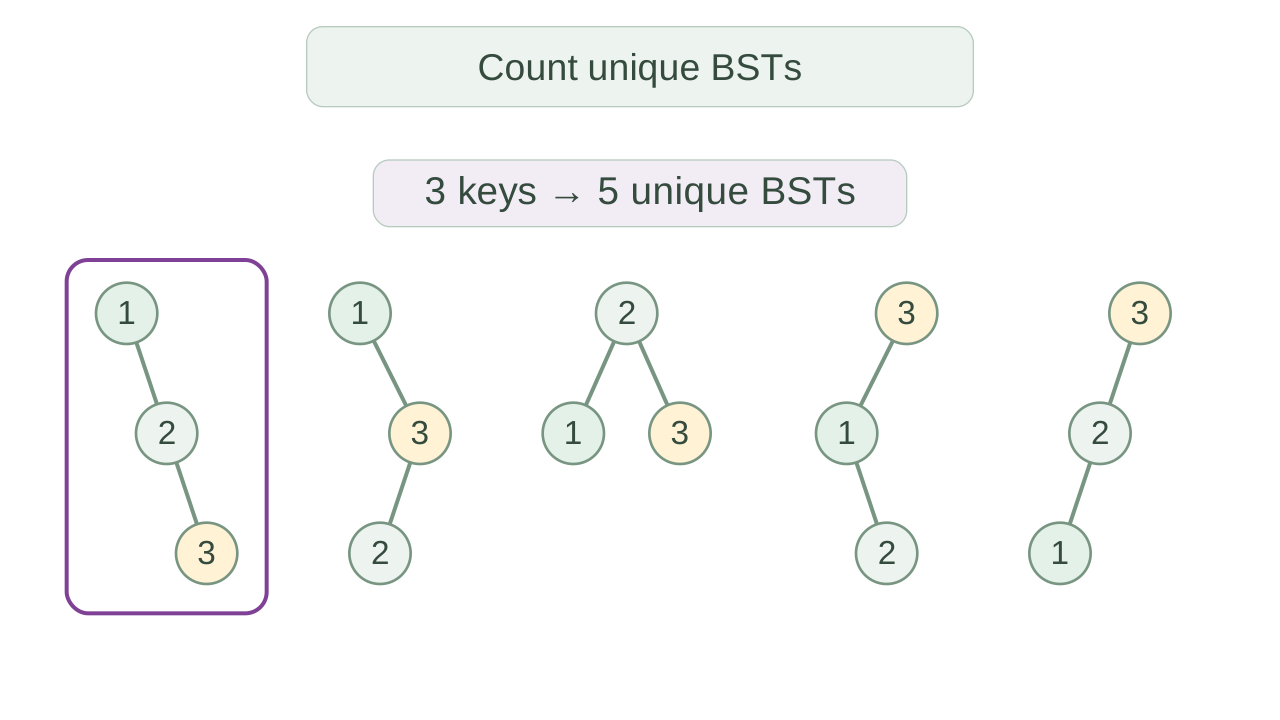
Write a program to find the number of structurally unique binary search trees (BSTs) that have exactly n nodes, where each node has a unique integer key ranging from 1 to n. In other words, we need to determine the count of all possible BSTs that can be formed using n distinct keys.